uriroig
← Blog

Guides28 October 2026 · 8 min read

How to choose a software development company

How to choose a software development company: criteria, key questions, warning signs, and the pros and cons of a small studio versus a large agency.

URUri Roiguriroig.es
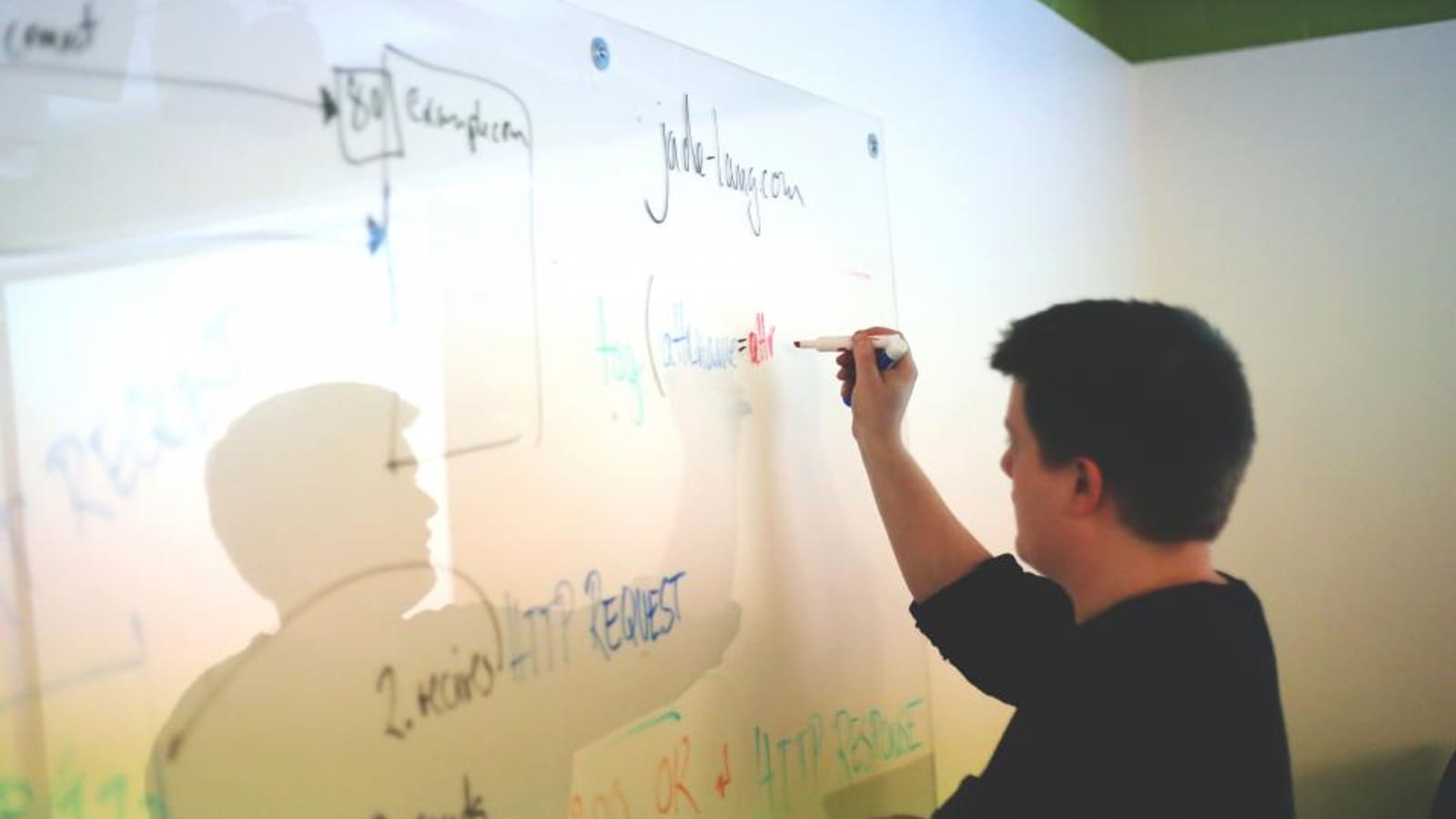
Desarrollador dibujando el esquema de una aplicación en una pizarra
📷 Startup Stock Photos · CC0 · Stocksnap
UR

I build websites, custom software, apps and AI automations for businesses.

  • ✓Fixed-price quote
  • ✓Reply within 24h
  • ✓No commitment
Get a free quote→
In this article
  1. What types of software company are there
  2. Small studio or large agency: pros and cons
  3. Criteria for choosing
  4. Questions to ask before signing
  5. Warning signs
  6. How to compare quotes
  7. Does it matter whether the company is in Barcelona?
  8. Frequently asked questions

Choosing a software development company is a decision you will feel for years: in what you pay, in how long each change takes and in whether the program ends up being used or left in a drawer. The short answer: choose the supplier who best understands your problem, shows you real work similar to yours, gives you a fixed-price quote in phases and leaves the code and data in your name. Size, city or the fashionable technology matter much less.

We are a small software development studio in Matadepera (Barcelona), so we obviously have an interest. That is why this guide tries to be fair to the options that are not us.

What types of software company are there

When you search for "software companies" on Google, very different suppliers appear. It helps to separate them before comparing:

Type What it does Fits when
Off-the-shelf software vendor Sells its own product (ERP, CRM, appointment management) by licence or subscription Your process is similar to that of most companies in your sector
Implementer or partner Configures and adapts another vendor's product You have already chosen a standard program and need it set up
Large consultancy or agency Big teams with separate roles (sales, project manager, design, development) Large projects, many departments involved, formal procurement requirements
Small studio or senior freelancer A few people who talk to you and write the code Small businesses with a specific problem who want direct contact
Freelance platform You hire individuals by the hour or by task Well-defined tasks, and you have someone in-house who can direct the technical work

If what you need is a program that already exists, do not look for a development company: look for a good implementer. If you are not sure which of the two cases is yours, the first step is technical consulting to clarify it before you invest.


Small studio or large agency: pros and cons

Neither is better in the abstract. Here is the honest comparison:

Small studio Large agency or consultancy
Who you talk to The person who writes the code A salesperson, then a project manager
Speed of decisions High, few layers Slower, more internal processes
Capacity Limited: few projects at a time Can put many people on it in parallel
Risk of dependence On a few people On whichever team you get, which may change
Specialists Generalists, with collaborators for very specific needs In-house specialists for almost everything
Cost structure Lower overheads More overheads passed on in the price
Ideal fit Small businesses, first versions, internal tools Large companies, projects with many teams

Real advantages of a small studio: you talk directly to the person who builds it, changes are decided quickly and you do not pay for layers of management you do not need.

Its limits, also real: if the project needs ten people at once for a year, a small studio is not the option. And if that person falls ill or leaves, you need the code to be documented and understandable by others. That is why it is so important to insist on code ownership and well-known technologies.

Advantages of a large agency: capacity, specialists and formal processes, which some companies need for their procurement department.

Its limits: it is common for the team that sells to you not to be the one that builds, and for small changes to pass through several filters.

Criteria for choosing

1. They understand your business before talking about technology

In the first meeting, a good supplier asks more than it talks. They want to know who will use the program, what each person does today, where time is lost and what would happen if nothing were done. If after ten minutes they are already proposing an app with artificial intelligence, be wary.

2. Real work similar to yours

Ask to see projects in production, not just screenshots. Even better if you can log in and try them. The projects we show are in our case studies, with what we did and the technology used.

3. A fixed-price quote, in phases

A quote "by the hour, as we go" shifts all the risk onto you. The sensible approach is a fixed price for a defined scope, divided into phases with deliveries you can test. If in phase one you find that something does not fit, you correct it before having invested everything.

4. Ownership of the code and the data

It must be in writing that the source code and the data are yours, where they are hosted and how they are handed over to you if you ever change supplier.

5. Well-known technologies

You do not need to understand programming, but do ask: what technologies will you use, and why? What matters is that they are widely used, documented and that other professionals can maintain them. We explain this in our guide to what a technology stack is.

6. A plan for after delivery

Software needs maintenance: security updates, backups, small adjustments. Ask what is included, how a change is requested and how quickly they respond to a fault.

Questions to ask before signing

Take this list to every meeting and compare the answers:

  1. Who will work on my project, and will I be able to talk to that person?
  2. What exactly does the quote include and what is left out?
  3. How are changes that arise mid-project handled?
  4. How often will I see progress that I can test?
  5. Who owns the code? Where will it be hosted and in whose name?
  6. What happens if we stop working together?
  7. How will my customers' personal data be protected?
  8. What maintenance will it need and how is it arranged?
  9. Can you show me a similar project in operation?
  10. Is there any part you would recommend not building custom?

The last question is very revealing. A good supplier will tell you which parts are best solved with standard software, even if that reduces their quote.

Example: a distribution company asks for a complete management program. An honest supplier may reply that invoicing and accounting should stay in its current program and that only order and route management should be custom-built, connected to the rest. A smaller project, and less risk.

Warning signs

  • A quote without questions. If they give you a price without understanding your process, the price means nothing.
  • "We do everything, in any technology." Nobody is good at everything.
  • Nothing to show. No projects in production, no references, no code.
  • A contract without a code ownership clause, or with hosting in the supplier's name and no option to transfer it.
  • Everything at the end. Months without seeing anything and a big delivery at the finish.
  • Pressure to sign with discounts that expire.
  • Closed proprietary platforms that only that supplier knows how to touch.

If you are already in a project with any of these signs and it is not moving forward, you do not always have to start from scratch. Sometimes what has been done can be audited and the project rescued.

How to compare quotes

Quotes from different software development companies are often hard to compare because each one understands the project in its own way. To avoid that:

Do this Why
Send everyone the same document with your problem, users and processes So that everyone quotes for the same thing
Ask for a breakdown by phase or feature To see where the cost lies and what you could leave for later
Ask what is excluded To avoid surprises (data migration, design, hosting, maintenance)
Compare timescales and way of working too The lowest price with deliveries only at the end can be the most expensive

Does it matter whether the company is in Barcelona?

If you are looking for software development in Barcelona or nearby, proximity helps in the first meetings and in workshops with your team: seeing how you work in person saves many misunderstandings. After that, day-to-day work can be remote without any problem. Do not choose on proximity alone, but bear it in mind if your project involves several people in the company. If you are in the Vallès, we have a page about custom software in Sabadell.

Frequently asked questions

Is it better to hire a freelancer or a software development company?

It depends on who will lead the project. A freelancer can be excellent if someone in your company knows how to define and review technical work. If not, you need a supplier who also takes care of the analysis, planning and maintenance.

How long does a custom software project take?

It depends on the scope. The sensible approach is to divide it into phases and first launch a small version that solves the main problem. That way you start using it early and decide the rest with real data.

What happens if the supplier disappears?

If the code is yours, sits in a repository in your name, uses well-known technologies and there is documentation, another team can carry on. If those conditions are not met, the risk is high. That is why it has to be agreed before starting.

Do I need to know how to code to choose well?

No. You need to be able to explain your problem and ask the questions in this guide. The answers, and the way they are given, say a lot.

Want a second opinion on your project or on a quote you already have? Tell us what you need and we will reply with a clear recommendation, even if it is that you do not need us.

What do manual tasks cost you?FreeWork out in a minute the hours and money you lose each year and what you could win back.
Share itLinkedInWhatsAppX
UR

Written by

Uri Roig

Technical consultant and developer with more than 10 years of programming. I help small businesses grow their revenue with websites, custom software, apps and AI automation, from Matadepera (Barcelona).

+34 662 23 19 83 · WhatsApp

Keep reading

Free quote · reply within 24h

Tell me about your case

Tell us what you need and within 24h you'll have a fixed-price estimate. No commitment.

Step 2 of 2

Your details

By submitting you agree that we may contact you about your request. See privacy.